
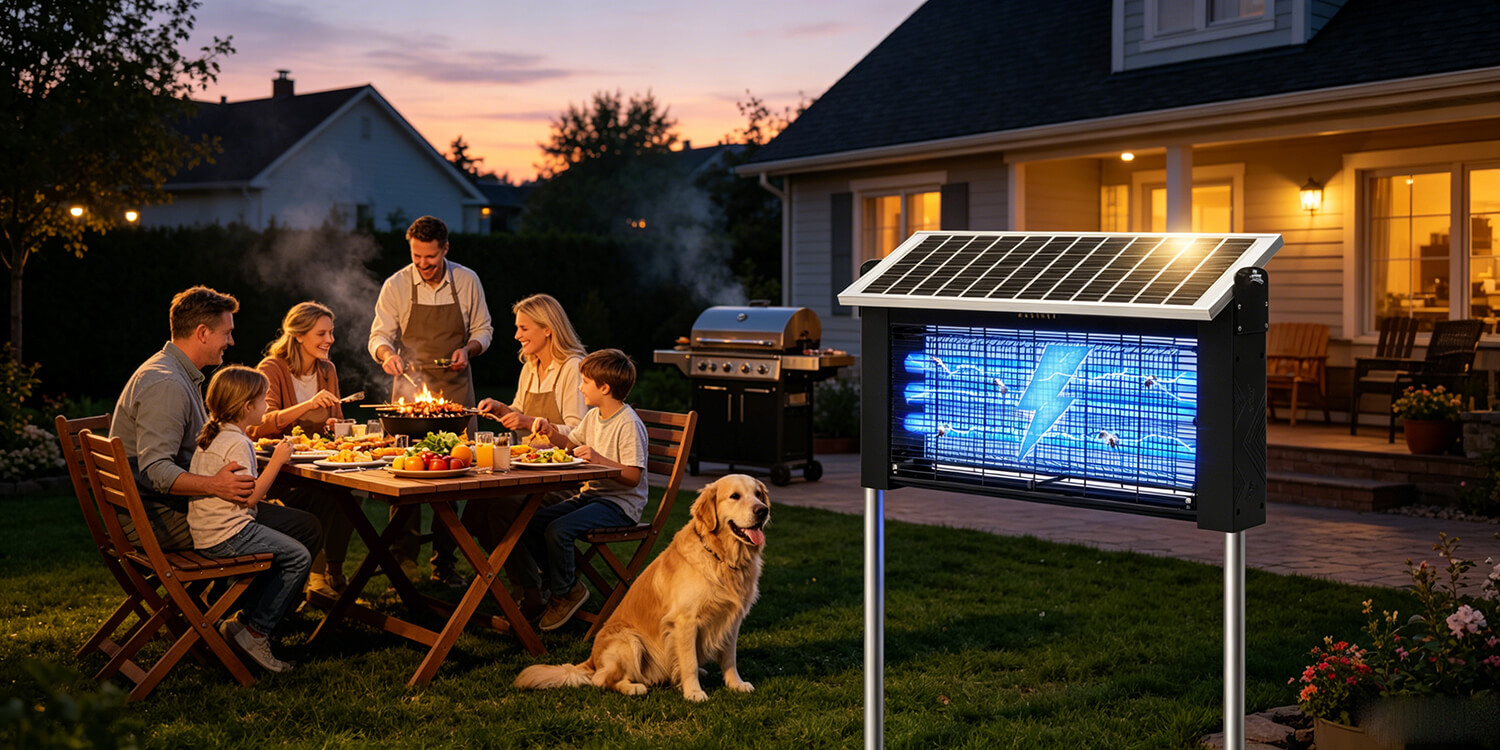
Have you ever wanted to place a bug zapper in a far corner of your yard, only to realize the nearest outlet is twenty feet away on the exterior wall? So you drag out an extension cord, snaking across the lawn—it looks messy, you worry about rain and electrical hazards, and you’re constantly afraid the kids or pets will trip over it.
We’ve been there. For two whole summers, that stubborn cord held us hostage.
Then we switched to a solar bug zapper. Honestly, at first we were skeptical too. “Rely on sunlight to kill mosquitoes?” It sounded like a crowdfunding gimmick. But after using one for a full summer, we never looked back. Today, we’re breaking down the solar vs. plug-in comparison, based on real experience, with no fluff.
Round 1: Installation Freedom – Plug-in Zappers Lose Badly
The plug-in zapper’s biggest enemy is the outlet.
Does your garden corner have an outlet? What about next to the flower bed? Near the pond? Probably not. Yet those are exactly where mosquitoes hide—under bushes, in the shade, near standing water. A plug-in zapper can only go where there’s electricity, not where mosquitoes actually gather.
And this single factor is the most critical for effective mosquito control. As we’ve emphasized in previous posts, you need to place the zapper where mosquitoes hide, not where you sit. A solar bug zapper has no cord restrictions. You can put it in any mosquito-infested corner of your yard.
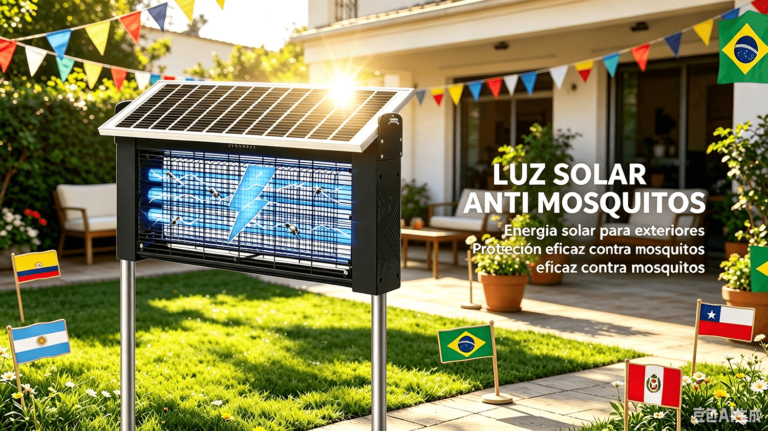
Our LANGY solar bug zapper now sits in the shadow of the old oak tree in our backyard—which used to be the mosquito “headquarters,” a good fifteen meters from the nearest outlet. The very first night after we placed it correctly, the catch tray was packed.
Round 2: Operating Cost – Solar's "Zero-Bill" Advantage Adds Up
Plug-in zappers may cost less upfront, but they run your electric meter every single day.
Let’s do the math: a typical plug-in zapper draws 20-40 watts. Running 8 hours a night for 5 months, the electricity bill adds about $15-$30 per year. If your yard is large, you may need two or three units. Over five years, the electricity alone could buy you a high-quality solar zapper.
A solar bug zapper? One investment, zero electricity cost. It charges in the sun during the day and works automatically at night. You do nothing. The long-term savings are crystal clear.
Round 3: Convenience – Automatic vs. "Did I Remember to Turn It Off?"
Plug-in zappers require you to remember to turn them on and off. Or you buy a timer—another expense, another thing to set up.
A good solar zapper comes with a built-in photocell sensor. It turns on at dusk automatically, and turns off at dawn to begin charging. You never have to think about it. After we installed our LANGY, we didn’t touch the switch for an entire summer.
Two working modes give you even more flexibility:
Photocell Mode – Charges during the day, automatically turns on at night.
All-Day Mode – Works while charging in the sun, perfect for daytime use in heavily shaded areas or continuous protection needs.
Round 4: Safety – No Cords, No Hazards
This is especially important for families with children.
A plug-in zapper means electrical cords running through your active areas. When you’re dining outside in the evening and kids are running around, a cord stretched across the ground is never reassuring. Rainy days make you worry about short circuits.
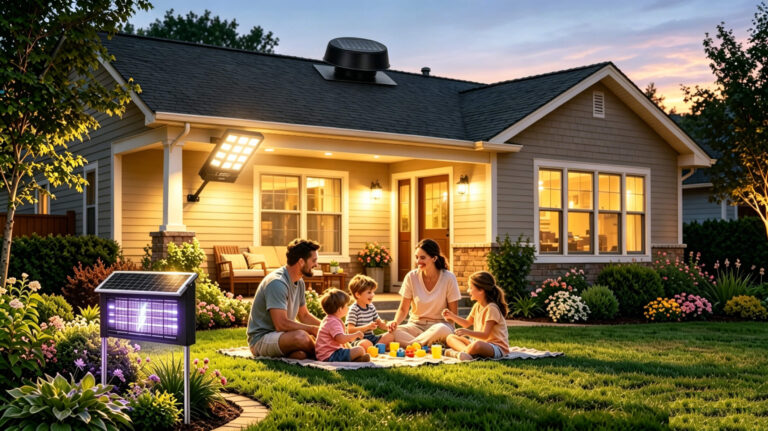
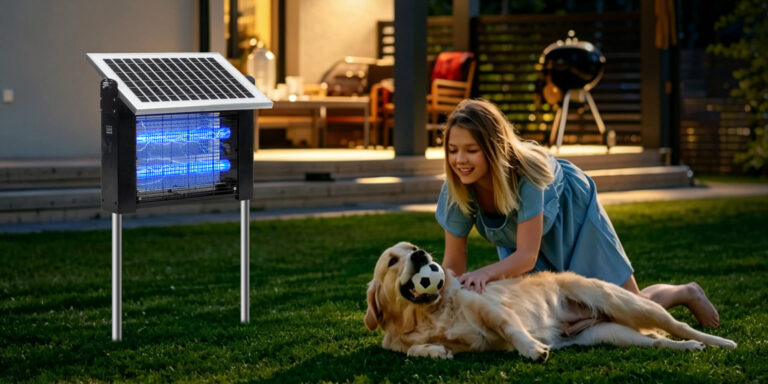
Solar bug zappers are completely cordless, eliminating tripping and shock hazards. And premium solar zappers use purely physical mosquito control—UV light attraction + high-voltage grid kill. No chemicals whatsoever. Safe for pets and children.
Round 5: Grid Performance – Instant Kill, Zero Rust
This is where many cheaper zappers fall short. They use low-voltage grids (around 2500V) that only stun mosquitoes—the bugs fall down and fly away later. Gross, right?
Our solar zapper uses a 4500V stainless steel high-voltage grid. That’s instant death. No half-dead mosquitoes crawling around your patio. And because it’s stainless steel, it never rusts and holds up to outdoor weather season after season.
Round 6: Cleaning – Hose It Down, Done
Nobody tells you this when you buy a bug zapper: they get dirty. Dead bugs accumulate, dust covers the solar panel. If you can’t clean it easily, performance drops fast.
Our unit is fully waterproof and washable. When the grid gets dirty, I simply rinse the entire zapper with water. Takes 30 seconds. The solar panel stays clean, the grid stays clear, and it keeps working like new.
Round 7: Attraction Power – The Right Wavelength Makes All the Difference
You might think all UV lights are the same. They’re not.
Most cheap zappers use 390NM or 395NM LEDs. They glow purple, sure. But mosquitoes don’t care. Through extensive research, we found that mosquitoes are strongly drawn to 365NM ultraviolet light. That specific wavelength triggers their instinct that says “food is here.”
Our LANGY uses UV 365NM LEDs, and the difference was immediate. The first night we turned it on, the zapping didn’t stop for hours. The catch tray was full the next morning. You can actually hear it doing its job.
Round 8: Battery Life – All Night, Every Night
Battery quality is the hidden difference between “works great” and “dies at midnight.”
Many solar zappers use standard 18650 batteries, which lose capacity fast. By summer’s second year, they might only hold half a charge. And worse—some low-quality 18650 batteries pose a fire risk.
Our zapper features a brand-new 32700 battery, providing over 15 hours of continuous operation (competitors typically offer only 6–8 hours). We’ve never woken up to find it dead. And it’s intrinsically safer, with no fire risk—peace of mind you can’t put a price on.
Round 9: Power Supply Options – No More "What If It's Rainy?"
Worried about cloudy days? We’ve got you covered.
Our solar bug zapper comes with a 5-meter solar extension cable. You can place the solar panel in full sun while positioning the zapper itself in the shady spots where mosquitoes live. Need the zapper indoors? The extension cable lets you keep the panel outside charging while the lamp works inside.
And for emergencies or extended rainy periods? There’s a USB charging cable included. Plug it into a power bank, and you’re back in business. No excuses, no downtime.
Round 10: Flexible Installation – One Zapper, Countless Spots
One size does not fit all when it comes to outdoor spaces. Our solar zapper supports multiple installation methods:
Table/floor standing – place it on any flat surface.
Hanging – from a tree branch, pergola, or hook.
Pole planting – stick the stake directly into dirt or grass.
Take it camping, move it to the front porch, bring it to the beach house. Portable and versatile.
What About Plug-in Zappers – Do They Have Any Advantage?
Yes, but limited.
If your yard gets zero sunlight—completely shaded by tall buildings or dense trees—solar charging won’t work well. And if you only use a zapper indoors or in a fully enclosed porch, plug-in may be your only option.
But let’s be honest: a yard with absolutely no sunlight? How are your plants surviving? Most homes have at least some sunny spots. The 5-meter extension cable on solar zappers exists precisely to solve this problem: panel in the sun, zapper in the shade.
For customers who don’t need the extension cable, we offer a $1 discount option—perfect if you plan to use the zapper exclusively outdoors in sunny areas.
Our Verdict
If you’re tired of being tied to extension cords, if you want to place your zapper exactly where mosquitoes actually live, if you don’t want to pay for invisible electricity bills every summer, and if you want a device that works automatically without daily fiddling—the solar bug zapper is the smarter choice.