
If you live in Australia, you know the feeling. Scorching sun outside, and inside, even with the air conditioning running, the ceiling feels warm, and upstairs rooms are stifling. You assume your AC is working hard, but in reality, your roof space is acting as a giant oven, radiating heat downwards and making your air conditioner work harder for less comfort.
How Hot Does Your Roof Space Actually Get?
During an Australian summer, roof cavity temperatures can reach a staggering 50°C to 70°C. Imagine a furnace sitting right above your ceiling. When the roof hits 65°C, the ceiling surface itself can reach up to 35°C. This heat continuously radiates into your living spaces below.
The result is skyrocketing air conditioning usage and electricity bills. Worse, this relentless heat and trapped moisture accelerates the aging of roofing materials, degrades insulation performance, and can lead to mould growth and timber rot.
Why Traditional Whirlybirds Fall Short
Many Australian homes rely on traditional wind-driven “Whirlybird” vents. These passive ventilators have a critical flaw: they depend entirely on wind to operate. On the hottest, calmest days—when you need cooling the most—Whirlybirds are essentially useless.
And even when the wind does blow, their extraction rate is minimal, typically moving only around 100 cubic metres per hour. By contrast, a quality solar-powered roof fan can move over 2100 m³/h, which is 20 times more effective.
The Solar Roof Fan Solution: Active Cooling, Zero Running Costs
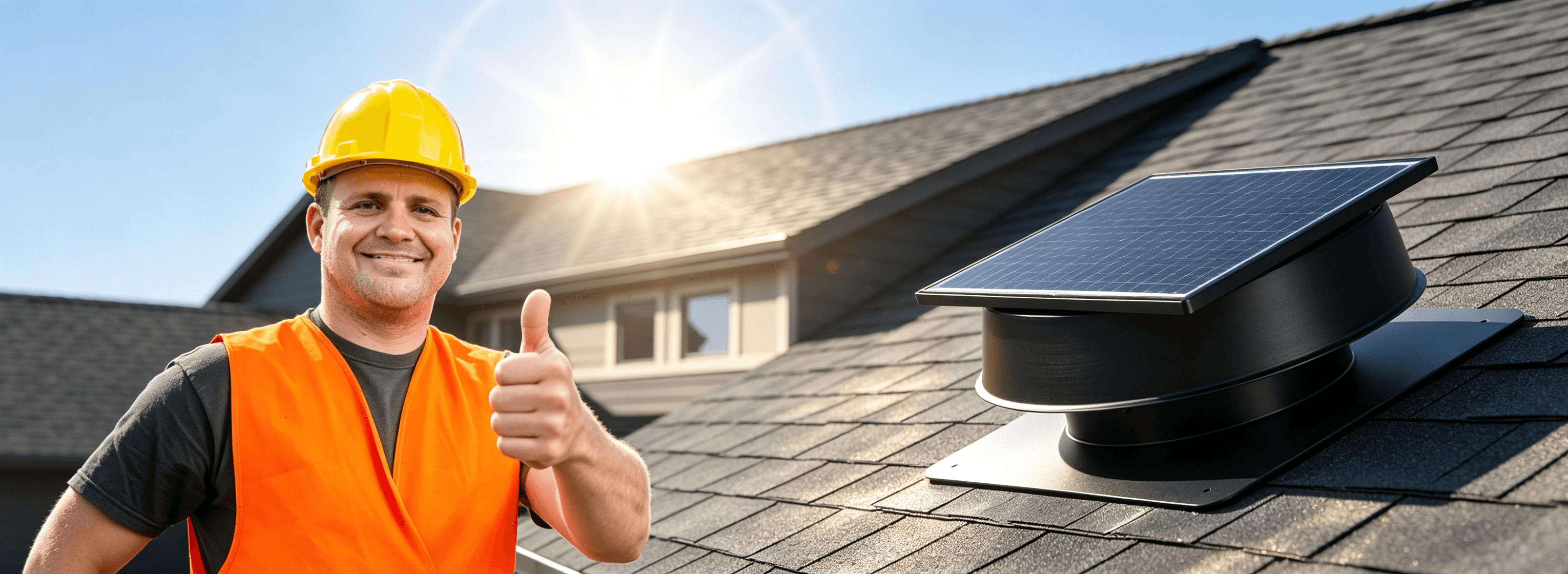
This is where a solar roof ventilators make the real difference. They use sunlight to actively drive a motor, extracting super-heated air from the roof space and replacing it with cooler, ambient air from outside.
A well-designed solar roof fan can lower roof space temperatures by 20–30°C, and can reduce the temperature inside your living spaces by up to 6°C. This means your AC system no longer has to battle the heat radiating from your ceiling. It runs more efficiently, lasts longer, and your energy bills drop.
Premium products available in the Australian market are typically equipped with intelligent thermostats. They are designed to automatically activate when the roof space reaches 25°C and shut off below 24°C, so they don’t draw warm air from your home in winter. That is smart, efficient cooling.
Features of a Smart, High-Performance Solar Roof Fan
If you are considering a solar roof fan for your Australian home, look for these key features:
Zero Running Costs: 100% solar-powered. No electricity bills.
Active, High-Volume Airflow: Not reliant on wind. Outperforms traditional Whirlybirds by over 20 times.
Intelligent Thermostat Control: Activates only when needed (typically at 25°C) and shuts off in winter to prevent heat loss.
Quiet & Durable Motor: Uses a brushless DC motor with double-shielded ball bearings for whisper-quiet operation and a service life of tens of thousands of hours.
Built for Australian Conditions: Weatherproof, corrosion-resistant, and built to withstand harsh UV and high winds
Final Thoughts
This summer, stop letting your roof space turn into an oven. A high-quality solar-powered roof vent is a smart, one-off investment that pays for itself over its long life through lower energy bills, reduced AC wear, and better protection for your home’s structure.
Learn more about the high-performance 55W Solar Roof Vent Fan here: