

From Bugged-Out to Buzz-Free: How We Set Up the Perfect Mosquito-Free Zone (And You Can Too)
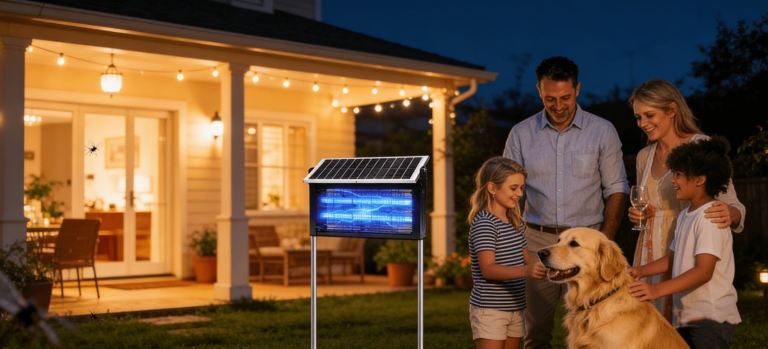
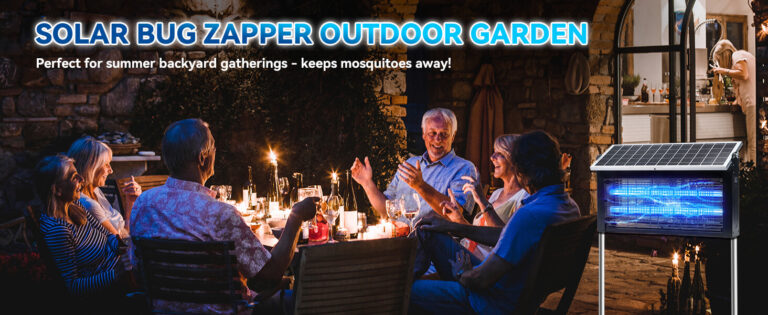
Let me paint you a picture. It’s a warm Friday evening. The grill is hot. The drinks are cold. You’ve got friends coming over in an hour. And then you step outside to set up—only to be greeted by a swarm of mosquitoes that clearly sent out their own invitations.
Sound familiar?
We’ve been there. Too many times. But after last summer’s mosquito misery (which you can read about here and here), we finally got smart. We didn’t just buy a mosquito killer. We built a system. And today, I’m going to walk you through exactly how we turned our bug-infested backyard into a bite-free oasis—using the LANGY 10W Solar Mosquito Killer Lamp as our secret weapon.
The “Before” Nightmare
Our backyard isn’t huge, but it’s got everything mosquitoes love: shade from an old maple tree, potted plants that hold moisture, and a little birdbath that might as well have a “welcome” sign for bugs. Last June, we couldn’t sit outside for more than 10 minutes without turning into a human pincushion.
We tried:
-
Citronella torches (smelled nice, did nothing)
-
Chemical sprays (worked okay, but felt gross breathing it in)
-
Those little wristbands (total gimmick)
-
Running inside every five minutes (not a real solution)
Then a neighbor mentioned solar bug zappers. I’ll admit—I was skeptical. Another gadget? But after reading up on what actually makes them work (more on that in a minute), we decided to try the LANGY 10W model.
Best decision we made all year.
Step 1: Understanding What You’re Actually Buying
Before you can set up a mosquito-free zone, you need to know what you’re working with. The LANGY 10W isn’t one of those cheap plastic toys that glows purple and attracts nothing. Here’s what’s inside:
The light that actually works: It uses 365NM UV LEDs. Most cheap zappers use 390NM, which mosquitoes barely notice. 365NM is the sweet spot—it’s the wavelength that makes bugs think “food is here” when really it’s “death is here.”
The grid that finishes the job: 3500 volts. Not 2500. Not “enough to stun them.” Enough to eliminate them instantly. When you hear that satisfying zap, you know it’s done.
The battery that keeps going: 6000mAh LiFePO4. That’s not marketing fluff—it means on a full charge, this thing runs 10-14 hours. From dusk until long after you’ve gone to bed. And LiFePO4 batteries last years longer than standard rechargeables.
The solar that actually works: 10W monocrystalline panel. In plain English? It charges faster and works better on cloudy days than the cheaper polycrystalline panels.
Step 2: Finding the Sweet Spot (Placement is Everything)
This is where most people mess up. They hang the zapper right next to their patio chair and wonder why they’re still getting bitten.
Here’s the truth: You don’t want to attract mosquitoes to you. You want to attract them away from you.
Think of it like this: The zapper is a decoy. It uses UV light to lure mosquitoes toward itself. If it’s sitting next to your dinner table, you’re inviting mosquitoes to come check out the party. Not ideal.
Here’s our placement strategy:
Step A: Identify the mosquito hideouts
Walk around your yard in the late afternoon. Look for:
-
Shady, damp areas
-
Dense bushes or shrubs
-
Areas near standing water (even a saucer under a plant pot counts)
-
Under decks or porch overhangs
These are where mosquitoes rest during the day. That’s where you want the zapper.
Step B: Create a “kill zone”
We put our LANGY about 20-25 feet away from our main seating area, in the corner by the maple tree (where mosquitoes love to hang out). The 16.5-foot extension cable that comes with it was a lifesaver here—we could position the solar panel in full sun while placing the zapper itself in the shady spot where bugs actually live.
Step C: Make it the brightest thing around
Mosquitoes compare light sources. If your porch light is brighter than the zapper, they’ll ignore the zapper. So we either turn off competing lights or position the zapper where it’s the main attraction in its zone.
Step 3: The Setup Routine That Actually Works
Once you’ve got the placement right, setup is surprisingly simple. Here’s our exact process:
Afternoon (before sunset):
-
Place the solar panel where it’ll get maximum sun (we use the included stake for the ground)
-
Run the extension cable to where you want the zapper
-
Make sure the zapper is in “Auto” mode—this means it charges during the day and turns on automatically at dusk
-
Give the solar panel a quick wipe if it’s dusty (takes 10 seconds, makes a huge difference)
At sunset:
-
Watch it turn on automatically (honestly, this still feels like magic)
-
Go about your evening—grill, eat, relax, repeat
The next morning:
-
Check the collection tray (it’s grossly satisfying)
-
If it’s dirty, clean it (more on that below)
-
That’s it. You’re done.
The auto day/night sensor is a game-changer. We used to forget to turn things on until we were already getting bitten. Now we don’t have to remember anything.
Step 4: Maintenance That Takes 2 Minutes (Seriously)
Here’s something nobody tells you about bug zappers: They need to be cleaned. A dirty zapper is a useless zapper. Dust on the solar panel means less charging. Dead bugs on the grid mean less voltage. But cleaning doesn’t have to be a chore.
Weekly quick-clean (2 minutes):
-
Turn the zapper off (or just do this in the morning when it’s off automatically)
-
Use the little brush that comes with it to sweep off the grid
-
Wipe the solar panel with a damp cloth
-
Empty the collection tray into the trash
Monthly deep-clean (5 minutes):
-
Turn it off completely
-
Use a hose on a gentle setting to spray down the whole unit (it’s IP65 waterproof, so this is safe)
-
Let it dry in the sun for an hour
-
That’s literally it
The safety net design means you don’t have to worry about shocking yourself or your kids accidentally touching it. But still—turn it off before cleaning. Common sense.
The Results: What Actually Changed
After a full summer with this setup, here’s what we noticed:
Week 1: We heard zapping sounds all evening. The collection tray was full every morning. We were still getting some bites, but maybe half as many.
Week 2: Fewer zapping sounds. Fewer bites. The mosquitoes were being eliminated faster than new ones moved in.
Week 3: We sat outside for three hours one night. Zero bites. ZERO. My wife literally said, “Is this real life?”
Month 2: We stopped thinking about mosquitoes entirely. They just… weren’t a factor anymore. We left the screen door open. We ate dinner outside every night that wasn’t raining. We even slept with the window open a few times.
The zapper covers 2100 square feet—that’s our entire backyard plus some. And because it’s solar, we’ve paid exactly $0 in electricity costs. The battery charges for free every day.
Where We Use It (Beyond the Backyard)
The beauty of a portable, solar-powered unit is that it’s not stuck in one place. Here’s where else our LANGY has saved the day:
Camping trips: We hang it from a tree branch near the tent. No outlets at the campsite? Doesn’t matter. Charges all day, protects all night.
The front porch: When we’re sitting out front watching the kids ride bikes, we move it to the planter by the steps. Takes 30 seconds.
Garage hangouts: Our garage becomes a hangout spot in summer evenings. The zapper hangs by the door and keeps bugs from following us in.
Vacation rental: We brought it to a beach house last month. The rental had a beautiful deck but tons of mosquitoes. One night with the zapper and we had the place to ourselves.
Common Mistakes (So You Don’t Make Them)
We learned some things the hard way. Let me save you the trouble:
Mistake #1: Putting it right next to your chair
Remember—you’re creating a decoy. Put it 15-20 feet away, near where mosquitoes already hang out.
Mistake #2: Forgetting to clean the solar panel
Even a thin layer of dust cuts charging efficiency by a lot. Wipe it down weekly.
Mistake #3: Expecting instant results
It takes a few days to eliminate the existing mosquito population in your yard. Give it time.
Mistake #4: Leaving competing lights on
If your porch light is brighter, the zapper loses. Turn off nearby lights or move the zapper.
Mistake #5: Not using the extension cable
The 16.5-foot cable isn’t optional—it’s how you put the panel in the sun and the zapper in the shade. Use it.
The Bottom Line
Look, I get the skepticism. I was skeptical too. Another thing to buy, another thing to plug in (or not plug in), another thing that probably won’t work.
But after a full summer of actually enjoying our backyard instead of running from it, I’m a believer. The LANGY 10W Solar Mosquito Killer isn’t magic—it’s just good engineering applied to a very old problem. The right wavelength, the right voltage, the right battery, and a setup routine that takes five minutes.
If you’re tired of being eaten alive every time you step outside, give it a try. Put it in the right spot. Clean it once a week. And then enjoy your summer the way it was meant to be enjoyed: outside, with friends, without slapping your legs every 30 seconds.
Your grill will thank you. Your guests will thank you. And your legs will definitely thank you.