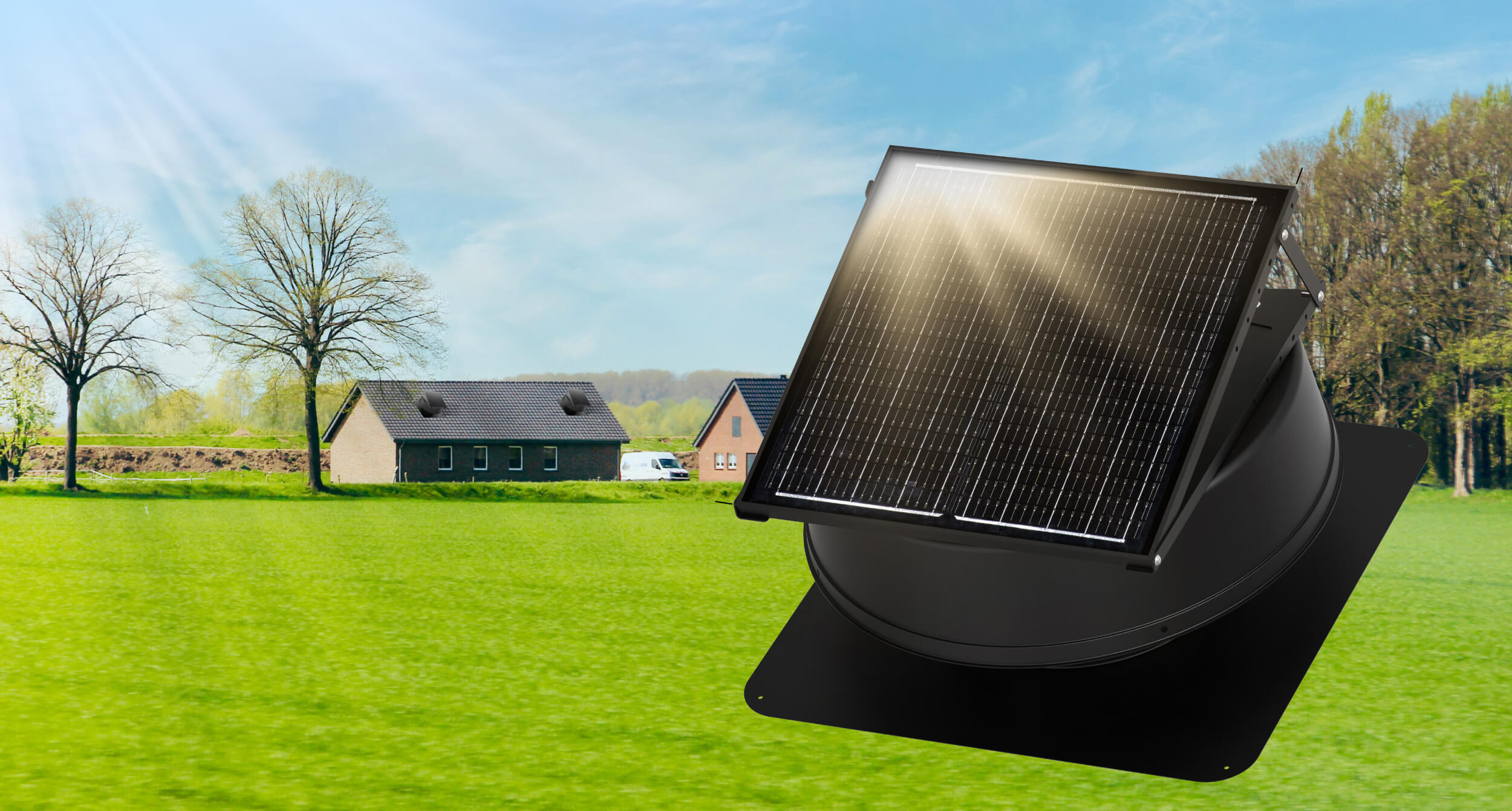
As we move through early 2026, it’s the perfect time to think about preparing your home for the warmer months ahead. While summer may still be a few months away, planning your cooling solutions now ensures you’re ready when temperatures rise. Solar attic fans offer a smart, sustainable way to beat the heat—by harnessing the free power of the sun, these systems actively remove trapped hot air from your roof space, improve indoor air quality, and reduce your reliance on air conditioning.
At LANGY, we’ve been at the forefront of solar powered ventilation technology for years. This guide will walk you through everything you need to know before investing in a solar attic fan system.
What is a Solar Attic Fan and How Does It Work?
A solar attic fan uses energy from the sun to power a fan that ventilates your roof space. A typical system consists of three main parts: a solar panel, a high-efficiency electric motor (like a brushless DC motor), and a fan.
Here’s the simple process:
Solar panels capture sunlight and convert it into electricity.
This electricity powers the motor, which spins the fan blades.
The fan extracts hot, stale, or humid air from inside your attic or roof cavity.
This creates negative pressure, which draws in cooler, fresh air from outside through soffit vents or other intake points, creating a continuous, natural airflow cycle.
Key Benefits of Investing in a Solar Attic Fan
Lower Energy Bills: By venting superheated air from your roof space, you significantly reduce the workload on your air conditioner, leading to direct savings on electricity costs.
Improved Indoor Air Quality (IAQ): Solar attic fans continuously expel pollutants like dust, fumes, VOCs (from paints or cleaning products), and excess moisture, replacing them with fresh outside air.
Protects Your Building: Excessive heat and moisture can damage roof structures, warp timbers, and promote mold and mildew growth. A solar attic fan helps maintain a drier, more stable environment, extending the life of your roofing materials.
Eco-Friendly: It operates entirely on renewable solar energy, reducing your carbon footprint.
Quiet Operation: Quality systems, particularly those with brushless DC motors like LANGY, operate silently, making them unobtrusive for homes.
Solar Attic Fans vs. Traditional Ventilation Options
To help you see the difference, here’s a comparison:
| Feature | Solar-Powered Attic Fan | Traditional Electric Attic Fan | Passive Vents (e.g., Whirlybirds) |
|---|---|---|---|
| Energy Source | Free Solar Energy | Grid Electricity | Wind (Unreliable) |
| Operating Cost | Zero | High (ongoing electricity bills) | Zero |
| Installation | Moderate (requires panel placement) | Moderate (requires electrical wiring) | Simple |
| Performance | High & Consistent (when sun shines) | High & Reliable (anytime) | Low & Inconsistent (wind-dependent) |
| Environmental Impact | None (Clean Energy) | High (Carbon Emissions) | None |
| Long-Term Value | Excellent (Fast payback, low upkeep) | Low (Ongoing costs) | Limited (Inconsistent results) |
Types of Solar Attic Fans
Beyond the power source, solar attic fans come in different configurations to suit various home types and needs. The table below breaks down the most common system types to help you identify which one is right for your project.
| System Type | Best For | Key Features | Pros | Cons |
|---|---|---|---|---|
| Standard Solar Attic Fan | Residential homes, small offices, general attic ventilation. | Fan and solar panel integrated into one unit. | Simple installation, lower upfront cost, fully automatic (sun = on). | No airflow on cloudy days or at night; performance tied directly to sunlight intensity. |
| Remote Solar Attic Fan | Large homes, areas with shaded roofs, or where optimal sun exposure requires separate panel placement. | Solar panel is separate and can be mounted remotely for optimal sun exposure. | Flexible installation, more powerful fan options, ideal for larger attics. | Slightly more complex installation, higher cost than standard integrated units. |
| Solar Attic Fan with Battery Backup | Homes wanting nighttime cooling or continuous ventilation in humidity-prone zones. | Includes rechargeable battery to store excess solar energy for use when the sun isn’t shining. | Provides continuous ventilation day and night, maximizes air quality and moisture control. | Higher initial investment, batteries have a limited lifespan and may need eventual replacement. |
| Hybrid Solar/Electric Attic Fan | Areas requiring guaranteed ventilation regardless of weather, or where roof space for panels is limited. | Can run on either solar power OR switch to mains electricity as a backup (often automatically). | Uninterrupted operation (always on), best of both worlds (savings + reliability). | Uses grid power on cloudy days (though minimal), most complex system, highest upfront cost. |
| DC-Powered Solar Attic Fan | Homeowners specifically looking to maximize energy efficiency and reduce attic heat. | Specifically designed for roof mounting; uses high-efficiency brushless DC motor. | Extremely energy-efficient, very quiet operation, specifically optimized for attic spaces. |
5 Critical Factors to Consider Before You Buy
Choosing the right solar attic fan is crucial. Ask yourself these questions:
1. What is Your Attic Ventilation Requirement?
You need a fan powerful enough for your space. Calculate the volume (length x width x height) of the attic you want to ventilate. Consider how many air changes per hour are needed for your climate and home type. This determines the required airflow rate (measured in m³/h or CFM).
2. Sunlight Exposure and Installation Location
How much direct sunlight does your roof receive? For optimal performance, the solar panel needs good sun exposure, ideally facing north (in the Southern Hemisphere) or south (in the Northern Hemisphere). An installer can assess your roof’s suitability.
3. System Type and Features
Do you need ventilation only when the sun shines, or 24/7? If constant airflow is critical (e.g., in humid climates), consider a system with a battery backup.
Do you want automatic control? Many modern solar attic fans come with thermostats or humidistats that activate the fan only when pre-set temperature or humidity levels are reached.
4. Product Quality and Durability
Invest in a system built to last. Look for:
Motor: A brushless DC motor is highly efficient, durable, and quiet.
Materials: UV-stabilized ABS plastic or corrosion-proof metals for the housing.
Seals: Quality seals to prevent rain or dust ingress.
Warranty: Look for comprehensive coverage on both the fan and the solar panel.
5. Professional Installation and Warranty
A poorly installed attic fan can lead to roof leaks and underperformance. Always use experienced, qualified installers. Check the product warranty and what it covers.
Common Applications for Solar Attic Fans
Solar attic fans are incredibly versatile. Here are just a few places they make a huge difference:
Residential Attics: To stop heat radiating into living spaces below.
Garages & Workshops: To expel heat, fumes, and humidity.
Gyms & Home Gyms: To maintain a fresh, odor-free environment.
Sheds & Outbuildings: To protect stored items from heat and moisture damage.
Small Offices & Studios: To improve comfort and air quality without running up electric bills.
Conclusion
Investing in a solar attic fan is a smart move towards a more comfortable, energy-efficient, and healthier home. By understanding the technology, its benefits, the different system types available, and the key factors in choosing the right one, you can make a confident decision that will pay off for years to come.
Ready to find the perfect solution for your needs? Explore the range of residential solar attic fans from LANGY, or contact our team for a free, no-obligation assessment.