
If you manage a commercial property, retail center, or an apartment complex, you know the balancing act well. Your parking lot needs to feel safe and inviting for visitors after dark. But those towering light poles also represent a significant chunk of your operational budget. Many facility managers are stuck with outdated systems, facing high electricity bills and frequent maintenance calls. The real question isn’t just how much new lights cost upfront, but how to design a system that optimizes long-term operational expenditure.
Key Factors That Drive Your Lighting Costs
When planning a parking lot lighting project, three main elements will shape your budget.
First is the fixture choice. The industry has largely moved past the era of high-pressure sodium lamps. But even among LEDs, quality varies. A cheaper fixture might reduce initial expenditure, but if its driver fails prematurely or its light output degrades quickly, replacement costs will offset any short-term savings. It is not uncommon for property owners to replace fixtures multiple times after opting for the lowest initial bid.
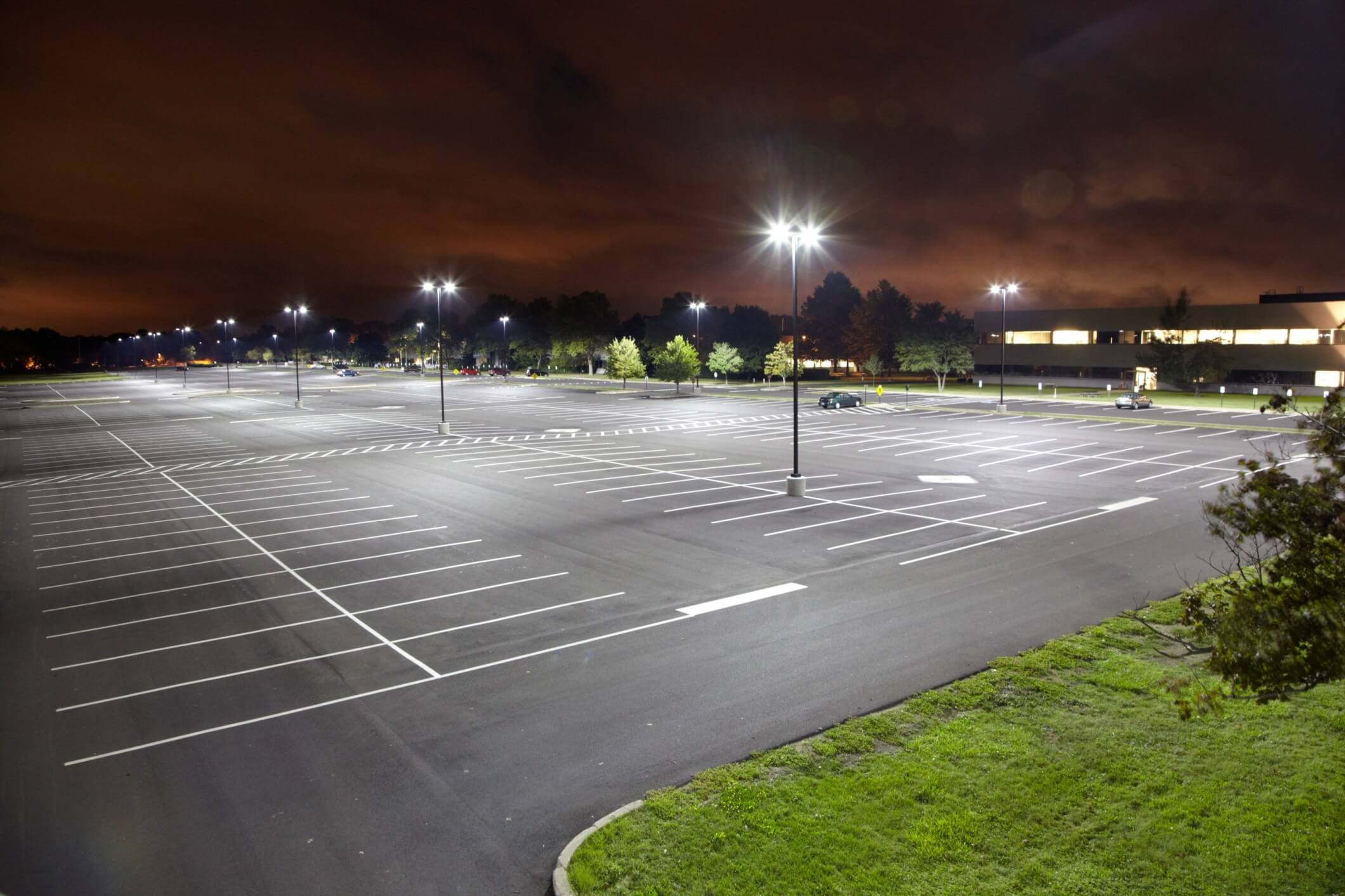
Next is the design layout. This is where a qualified lighting designer provides value. Pole height and spacing determine how many fixtures are needed to achieve uniform light coverage. An optimized layout uses fewer poles to eliminate dark spots and avoid wasted overlapped light. The objective is not merely brightness, but light uniformity.
Finally, controls are a significant factor in modern lighting design. Integrating motion sensors or timers allows lights to dim to 30% power during unoccupied periods and return to full output when motion is detected. While this adds to initial project cost, the resulting energy savings typically recover the investment within several years.
To help you visualize how these factors interact, here’s a breakdown of what drives your budget:
Table 1: Key Factors Influencing Your Parking Lot Lighting Project Budget
| Factor | Description | Impact on Cost |
|---|---|---|
| Fixture Quality | Choice between basic LED retrofits vs. high-quality, commercial-grade LED fixtures with better drivers and lenses. | High-quality fixtures have higher upfront cost but lower long-term replacement and failure costs. |
| Pole Layout & Height | The number of poles, their height, and spacing determine how many fixtures are needed to achieve uniform light coverage. | An optimized layout can reduce the number of poles/fixtures needed, lowering both material and installation labor costs. |
| Lighting Controls | Integration of photocells, motion sensors, timers, and centralized dimming systems. | Adds significant upfront cost, but provides the greatest long-term energy and operational savings. |
| Installation Complexity | Costs for trenching, wiring, concrete base work, and crane services, which vary based on site conditions. | Can be a major, often underestimated part of the initial project cost, especially for ground-up installations. |
Comparing Your Options: Upfront Price vs. Long-Term Value
A simple retrofit—replacing old lamps with LED corn bulbs—represents the lowest entry cost. However, this approach retains existing housings and wiring, which may limit performance and longevity.
A complete redesign with new LED fixtures and an integrated control system requires higher initial capital outlay. However, evaluating total cost of ownership reveals a different picture. LEDs reduce annual electricity consumption by 50-70% compared to conventional sources. Their extended service life—typically 50,000+ hours—minimizes maintenance expenditures for bucket trucks and electrician labor. These savings translate directly to improved operational profitability.
To make this concrete, the following estimates for a medium-sized lot with approximately 20 fixtures illustrate typical cost trends:
Table 2: Cost Comparison: Traditional vs. LED vs. Smart LED Systems
| Cost Factor | Traditional (e.g., Metal Halide) | Basic LED Retrofit | Full Smart LED System |
|---|---|---|---|
| Estimated Upfront Cost | Low (if existing) / Medium (new) | Low to Medium | Medium to High |
| Annual Energy Cost | $3,500 | $1,400 (60% savings) | $900 (74% savings) |
| Annual Maintenance Cost | $800 (frequent bulb/ballast changes) | $200 (rare) | $150 (rare + remote diagnostics) |
| Estimated Lifespan | 15,000 – 20,000 hours | 50,000+ hours | 50,000+ hours |
| Control & Flexibility | None (On/Off only) | Limited (On/Off via timer) | High (Dimming, scheduling, motion sensing) |
| 5-Year Total Cost Estimate | $23,000+ | $9,500 | $8,500 |
As the comparison indicates, the smart LED system carries the highest initial cost. However, when energy savings and reduced maintenance are factored in, its five-year total cost is actually the lowest. This illustrates the distinction between purchasing lighting equipment and investing in a comprehensive system. The additional cost of smart controls is typically recovered within two to three years through reduced utility expenses.
How to Balance Cost with a Great Design
Cost reduction should not come at the expense of adequate illumination, which affects both safety and property appeal. A successful design prioritizes adequate illumination for walkways and entry points.
A practical approach is to implement a tiered lighting strategy. Entrances, exits, and pedestrian walkways receive continuous full illumination. For main parking areas, a baseline light level is maintained, with controls increasing output only when motion is detected. This method satisfies safety requirements while minimizing energy consumption during low-occupancy periods.
Upgrading parking lot lighting represents a strategic investment for commercial properties. It enhances security, improves curb appeal, and reduces operating costs. The optimal approach involves evaluating total cost of ownership rather than focusing solely on upfront fixture prices. For those planning a project, consultation with a qualified lighting professional can provide accurate long-term savings projections specific to the site.